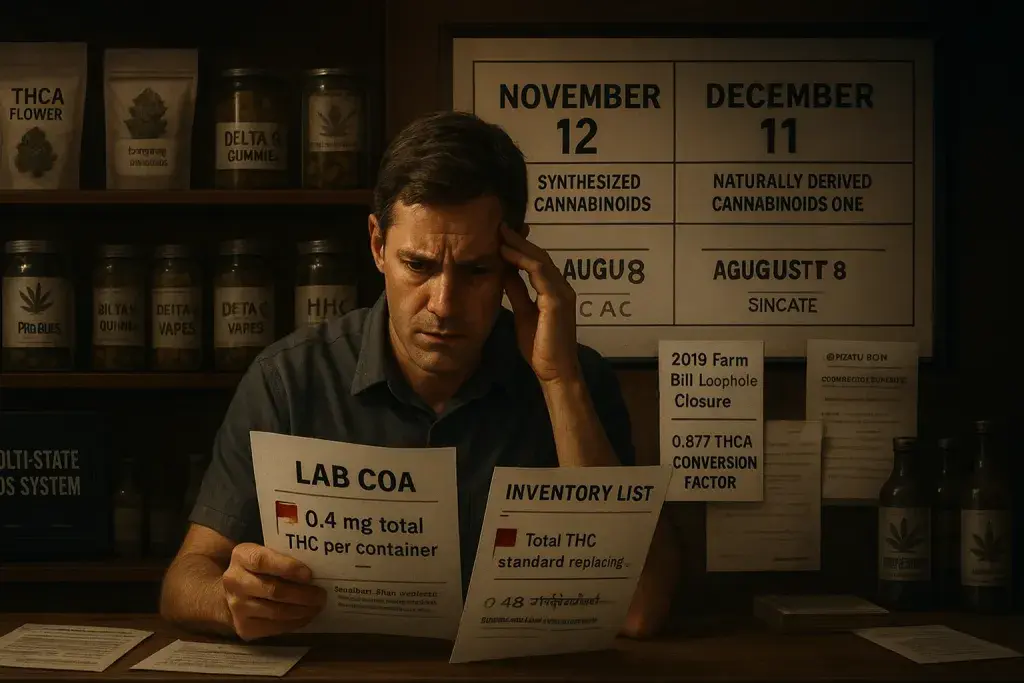
The federal law that redefines hemp is already on the books. It is not a bill working through committee, not a proposal awaiting a hearing - it was signed November 12, 2025, and the only real question left is when, not if, it takes effect. For dispensary operators, brand owners, and wholesalers stocking hemp-derived cannabinoids, that distinction matters more than any headline suggests.
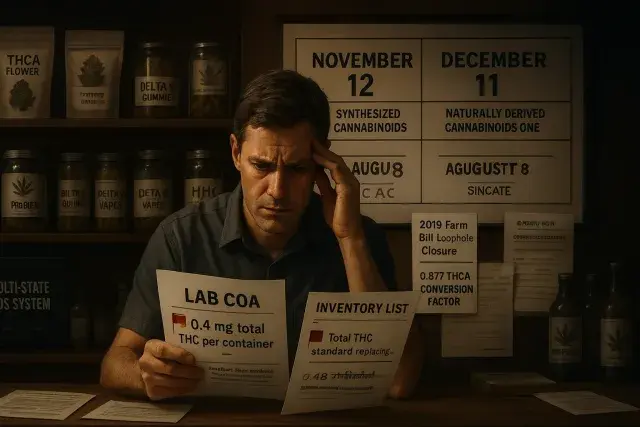
Section 781 of the FY2026 appropriations act swaps the old delta-9-only threshold for a total-THC standard that folds in THCA, plus a 0.4mg total-THC cap per retail container. That single mechanical change is why industry estimates put roughly 95% of current hemp-derived cannabinoid products on the wrong side of federal law once the date lands. Operators running multi-state footprints, including those managing inventory through a Texas dispensary POS platform, need to treat this as a live compliance timeline rather than background noise - because the products triggering the ban (THCA flower, delta-9 gummies at current dosing, delta-8 and HHC formulations) sit on budroom shelves and wholesale menus right now. Texas dispensary POS platform
The August 8 Senate vote complicates rather than clarifies things. Lawmakers passed a stopgap funding bill pushing most restrictions from November 12 to December 11, 2026 - but only for naturally derived cannabinoids. Synthesized products like delta-8 got no such reprieve; they still face the original November date. And the delay itself still needs House passage and a signature before it's real. Retailers planning SKU management and reorder cycles around a single "ban date" are working from an assumption that hasn't held for even nine months.
Why the Definition Change Hits So Hard
The 2018 Farm Bill measured only delta-9 THC by dry weight, which is precisely why THCA flower could be sold as compliant hemp - raw THCA isn't delta-9 until heat converts it. Once total THC counts THCA using the standard 0.877 conversion factor, flower testing 20% THCA or higher blows well past any workable limit. That's not a loophole closing gently; it's a category disappearing from the federal definition of hemp entirely. Delta-8 and HHC fail differently: they're excluded outright as lab-made cannabinoids, regardless of how they test.
What Operators Should Actually Do Now
Waiting for a final date before acting is the wrong instinct. Compliance teams should be auditing current SKUs against the total-THC standard today, not in November. That means pulling current lab testing and COAs, flagging any product near or above the 0.4mg-per-container line, and separating naturally derived inventory from synthesized cannabinoids in planning documents, since they now face different deadlines entirely.
- Audit THCA-based flower, pre-rolls, vapes, and concentrates against the new total-THC math
- Flag delta-9 beverages and edibles exceeding 0.4mg total THC per container
- Separate delta-8, delta-10, and HHC inventory - these lose federal cover on the earlier November date regardless of the Senate delay
- Track state law independently, since permissive state rules never override the federal floor
State Rules Still Set the Retail Floor
California's AB 8 already routes THCA products through licensed dispensaries. Oregon and Connecticut have moved to total-THC testing standards ahead of the federal government. New Jersey has banned intoxicating hemp retail outright. Texas enforcement, meanwhile, has been paused by a temporary restraining order - a reminder that litigation, not just legislation, shapes what's sellable on any given week. None of this exempts a retailer from the federal definition once it changes; state law adds restrictions on top of the federal baseline, it doesn't substitute for it.
The practical takeaway for operators isn't panic - it's documentation. Keep testing current, keep packaging compliant with whatever cap applies in your state, and build inventory plans around the earlier of the two federal dates, not the later one. The debate over repeal, further delay, or an FDA-style regulatory framework will keep moving through Congress. The compliance obligations on your shelf won't wait for that debate to finish.