The transaction-first dispensary model - walk in, consult a budtender, pay, leave - served the early legal market well enough. It was built for a moment when compliance and category education were the whole job. That moment is passing. Operators in maturing state markets are now testing whether a dispensary can mean something beyond its point-of-sale terminal, and what that shift costs, operationally and strategically, for the businesses willing to try it.
Missouri's SWADE Cannabis, operated under BeLeaf Medical Co.'s vertically integrated structure, has made that bet more deliberately than most. The company runs 12 dispensaries across the state and has spent several years building programming - event venues, educational workshops, chef-driven dinners, a discovery-based loyalty program - around its retail footprint. The logic is straightforward: in a market where SKU counts keep climbing and competitors can undercut on price, the store experience becomes a differentiator that wholesale pricing can't replicate. That pressure isn't unique to Missouri. Retailers across the country, from markets with mature adult-use frameworks to newer entrants still building their compliance infrastructure - operators watching tools like Virginia cannabis POS systems adapt to evolving state rules - are asking the same question: what brings a customer back besides the product itself?
The answer SWADE has landed on borrows from hospitality retail more than from traditional cannabis dispensing. The company operates The Church on Delmar in St. Louis's Delmar Loop, a cannabis-friendly venue that hosts gatherings for consumers, local artists, and neighborhood organizations. In Kansas City's Crossroads district, it is opening The Tree Room, a consumption-friendly event space. These aren't marketing stunts grafted onto a dispensary. They represent a structural choice about what the retail footprint is supposed to do - and what kind of customer relationship the operator wants to build.
Why the "Third Place" Model Makes Business Sense Now
The "third place" concept - somewhere that is neither home nor work, where regular presence builds a kind of belonging - has driven foot traffic and brand loyalty in coffee, beer, and independent retail for decades. For cannabis, the timing now makes more sense than it would have five years ago. Early-market consumers needed basic product guidance; they came in uncertain and left with whatever the budtender recommended. Today's cannabis consumer often arrives with opinions. They've done research, they've tried several formats, and they're navigating a menu that might include flower, live resin concentrates, beverages, vapes, edibles, tinctures, and a growing shelf of minor cannabinoid products. The dispensary that can contextualize that complexity - through in-store specialists, educational events, or curated discovery programs - has something a price-drop can't match.
SWADE's Passport Program reflects this directly. Structured as an annual membership across its Missouri stores, the program rewards guests for trying products outside their usual purchases rather than simply rebuying the same items. That's a meaningful departure from most cannabis loyalty architectures, which are essentially frequency rewards - spend more, earn points, redeem against future purchases. Discovery-based loyalty programs are operationally harder to design and harder to attribute in a POS system, but they serve a different retention goal: building a customer who trusts the brand's curation rather than one who just finds it convenient.
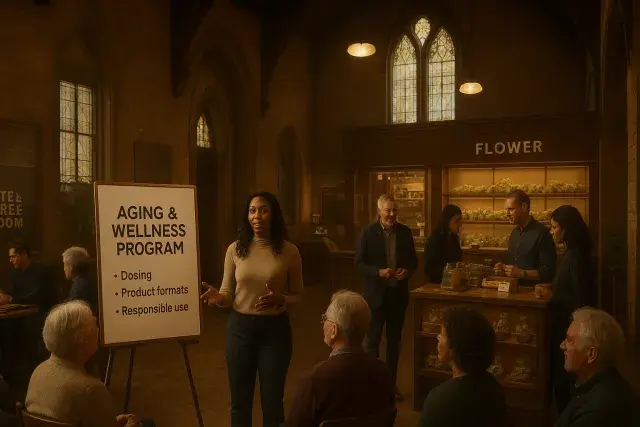
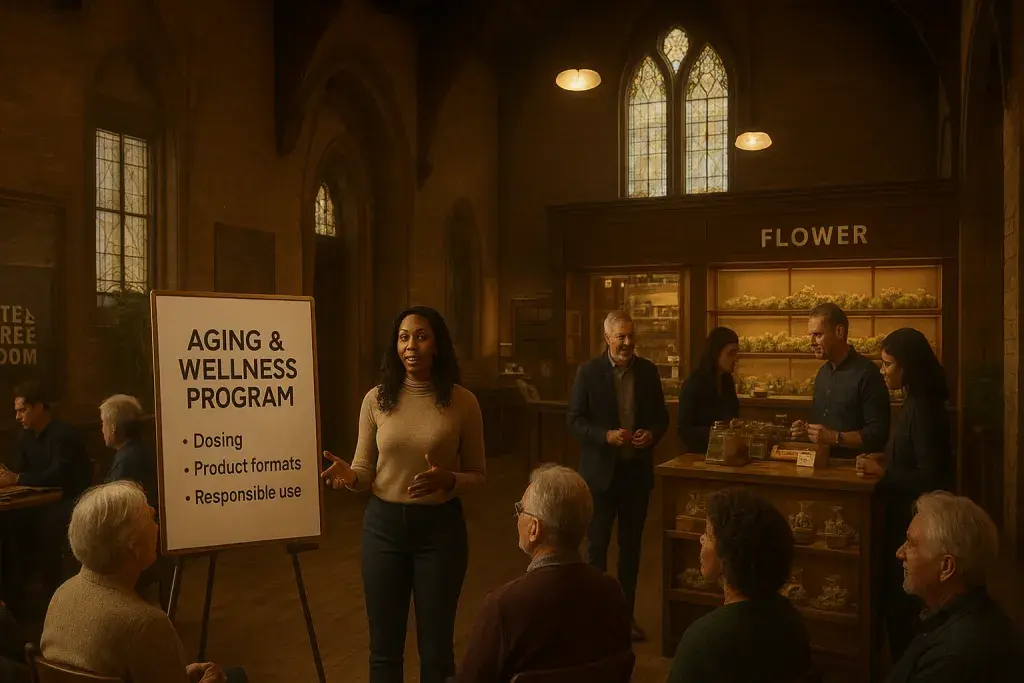
The Aging & Wellness Program addresses a segment that dispensaries often handle poorly. Older adults entering the cannabis market frequently arrive with specific, practical questions - about dosing, about product formats, about what responsible use looks like given their medications or health considerations. A hard sell doesn't work here, and frankly neither does a standard budtender consultation. Presentations, workshops, and guided dispensary tours give this consumer group what they actually need: structured, low-pressure information that lets them make informed decisions. "Whether you're brand new to cannabis or a longtime enthusiast, we're here to help you discover what works for you and build confidence in your own journey," says Cierra Sally, Senior Director of Retail Operations at SWADE. That instinct - meeting the consumer where they are rather than where the sale is - is what makes the program operationally interesting, not just good public relations.
Vertical Integration as the Operational Foundation
None of this community infrastructure works without a stable supply chain underneath it. SWADE's event programming, exclusive strain releases, and deli-style flower displays - where guests examine and select flower before purchase rather than choosing from sealed, prepackaged units - all depend on BeLeaf's vertically integrated model. When a company controls cultivation, processing, and retail under one license structure, it can maintain product consistency, manage inventory timing, and build exclusive in-house brands that differentiate the shelf. SWADE carries its proprietary Sinse brand alongside a curated third-party lineup, which is a classic vertically integrated retail play: margin on house products, breadth from outside brands, curation as the editorial voice.
"We are a vertically integrated cannabis company, which is super beneficial in the industry, as we have the ability to do all functions necessary to operate," said Kevin Riggs, CEO of BeLeaf Medical Co. That structure matters for the experiential model specifically. A watch party or a chef's dinner with a limited product release requires precise inventory coordination - you can't promise a specific strain at a specific event if your supply chain runs through a third-party wholesaler with its own allocation pressures. Vertical integration gives the operator control over those details in a way that pure retail cannot.
The convenience layer completes the picture. A 24-hour preorder drive-thru pickup window at SWADE's Overland location and same-day delivery across its service areas aren't in tension with the experiential strategy - they're complementary to it. Community programming attracts the customer; convenience retains them for the routine purchase. That's the same dual-channel logic that drives omnichannel retail in most other consumer categories, and there's no reason cannabis dispensaries are exempt from it.
What This Means for Operators Beyond Missouri
The model SWADE is building isn't replicable everywhere, and that's worth being direct about. Consumption-friendly event spaces require specific state and local licensing frameworks that don't exist in every market. Zoning restrictions in many jurisdictions still prohibit on-site consumption. The regulatory gap between a traditional licensed dispensary and a hospitality-style cannabis venue is significant, and operators should not assume that what's permissible in Missouri applies in their state without a careful compliance review.
That said, the underlying retail strategy - loyalty through discovery, education as a retention tool, community programming that builds durable brand identity - doesn't require an event venue license. An in-store specialist program, a workshop series for older adults, a loyalty architecture built around product exploration rather than purchase frequency: these are operational choices available to almost any licensed dispensary with the staff capacity and willingness to treat the customer as someone worth educating.
The harder question is economic. Experiential retail costs more to run than a transaction-optimized floor. Staff time spent on workshops and consultations is staff time not processing tickets. Event programming requires coordination, inventory planning, and marketing resources that a lean single-location operator may not have. For a 12-store operator with vertical integration and in-house production capacity, the math works differently than it does for a single-license holder competing on price in a crowded metro market.
Still, the directional shift is clear. Dispensaries that built their operations around compliance efficiency and category introduction served the first chapter of the legal market well. The next chapter belongs to operators who can give consumers a reason to be there - not just a reason to buy. As Riggs put it: "As Missouri's cannabis market continues to mature, our focus is on creating a more modern, convenient experience for our customers." The stores that last will probably be measured by both.