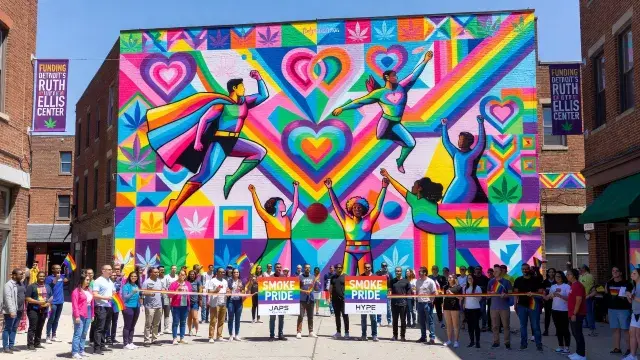
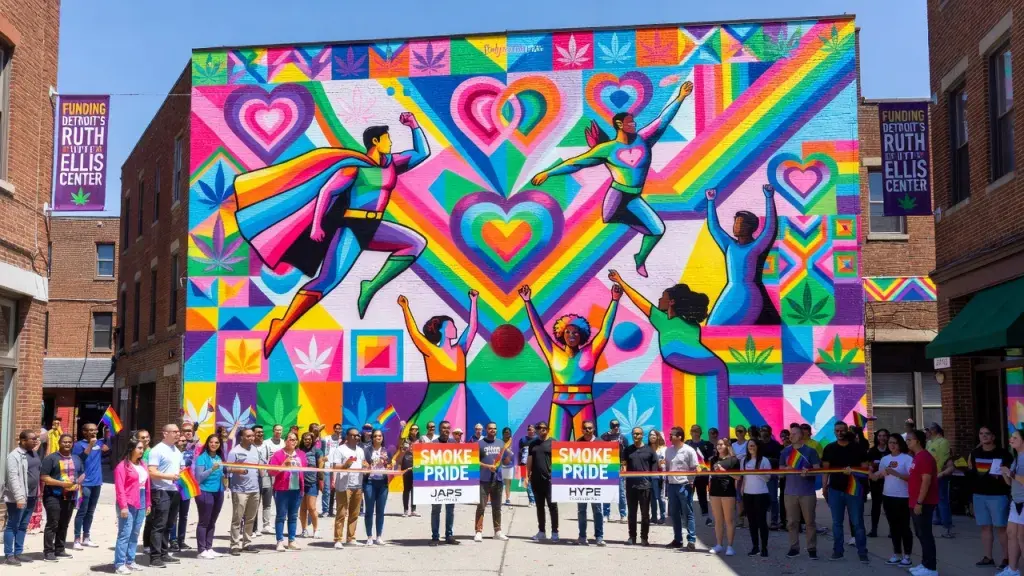
A ribbon-cutting in downtown Ferndale this week marked more than a new piece of public art. "Polychromatic Super You," a 40-by-25-foot mural by Michigan artist Joey Salamon, now covers a wall in the alley at 258 W. Nine Mile Rd., commissioned jointly by cannabis retailers JARS Cannabis and HYPE Cannabis as part of a broader Smoke with Pride campaign benefiting Detroit's Ruth Ellis Center.
The arrangement is worth unpacking, because it says something about where cannabis retail marketing is headed as the market matures. Ten percent of proceeds from HYPE products sold at JARS locations, and all proceeds from a co-branded Smoke with Pride kit, go to the youth center. That kind of cause-marketing tie-in requires the same back-office discipline as any other promotional SKU: tracking which products qualify, reconciling donation totals against actual sales, and keeping the accounting clean enough to survive a tax season under 280E. Multi-location operators managing that kind of granular reporting typically lean on point-of-sale and inventory platforms built for the industry - cannabis dispensary management software virginia and similar regional tools illustrate how operators elsewhere handle SKU-level promotional tracking without creating a compliance headache down the line. cannabis dispensary management software virginia
Public-facing brand campaigns like this one also carry a marketing-compliance dimension that dispensary operators can't ignore. Michigan's advertising rules for licensed cannabis businesses restrict content that appeals to minors and require age-gating on digital assets, which is presumably why the mural's QR code routes visitors to informational and donation resources rather than product promotion or a retail menu. That distinction matters. A mural funded by a licensed cannabis business sits in a gray zone between public art and brand advertising, and regulators in adult-use states have shown they'll scrutinize sponsorship activity that blurs into product marketing near schools, parks, or other sensitive zones.
Why Cannabis Brands Are Investing in Cause Marketing
Cannabis operators face advertising restrictions that alcohol and mainstream retail brands generally don't - no broadcast advertising in most markets, limited billboard placement, and strict age-verification requirements on digital channels. Community-facing projects like a commissioned mural sidestep some of those constraints while building local goodwill, brand visibility, and press coverage that a traditional dispensary promotion couldn't generate on its own. For JARS and HYPE, tying the artwork to a nonprofit partner also signals corporate responsibility positioning that increasingly matters to landlords, municipal officials, and license renewal boards evaluating whether a cannabis retailer is a good neighbor.
The Compliance Layer Behind a Feel-Good Campaign
None of this happens outside the regulatory structure that governs licensed cannabis businesses. Charitable tie-in promotions still fall under marketing rules enforced by the Michigan Cannabis Regulatory Agency, meaning any packaging, signage, or point-of-sale messaging referencing the Smoke with Pride kit has to meet the same compliant-packaging and labeling standards as any other product. Operators running similar donation-based promotions should keep documentation tight - donation percentages, batch-level sales data, and vendor agreements - in case of an audit. It's a small operational lift for a campaign with real community upside, but it's not optional.