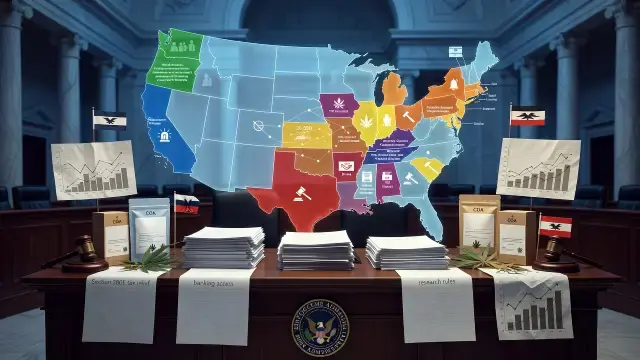
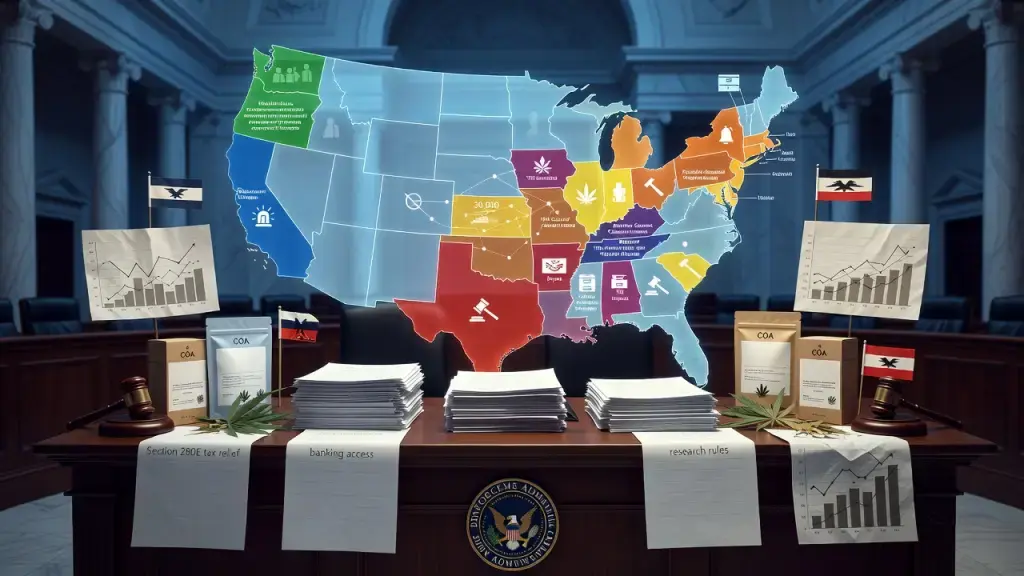
The Drug Enforcement Administration and opponents of marijuana rescheduling have filed what are expected to be their final briefs in the long-running administrative hearing over moving cannabis from Schedule I to Schedule III. An agency judge now holds the record and will issue a recommendation that could reshape banking access, tax treatment and research rules for the entire industry.
Why the Final Briefs Matter for Operators
Here's the catch with administrative proceedings like this one: they move slowly, but the stakes compound the longer they drag on. A Schedule III reclassification would not legalize marijuana federally, and it would not resolve the conflict between state licensing regimes and federal law. What it would do, in practice, is open the door to relief from Section 280E - the tax code provision that currently bars plant-touching businesses from deducting ordinary expenses like payroll, rent and marketing. For multi-state operators carrying heavy debt loads and thin margins, 280E relief is arguably the single biggest lever available to improve cash flow. The administrative law judge's recommendation isn't binding, but it carries weight with DEA leadership and could accelerate or stall the process further depending on which way it leans.
Separately, the National Congress of American Indians adopted a resolution arguing the administration failed to properly consult tribes before drafting its rescheduling order, and is pushing for amendments to ensure tribally regulated cannabis programs are explicitly covered. That's a reminder that rescheduling touches more than mainstream state-licensed markets - tribal sovereignty and federal trust obligations complicate an already dense regulatory picture.
State Programs Keep Moving Regardless
While the federal process grinds forward, state regulators and legislatures aren't waiting around. Massachusetts lawmakers advanced a bill to let military veterans access medical cannabis without a doctor's recommendation and to add PTSD, chronic pain and opioid use disorder as qualifying conditions - an expansion that would widen the patient pool for licensed dispensaries in a state still digesting the recent defeat of a ballot measure to roll back legalization entirely.
Kentucky's program, meanwhile, crossed 30,000 medical cardholders, with regulators describing themselves as more than halfway through building out the state's approved business network. That's a useful data point for suppliers and real estate investors eyeing entry: card growth signals demand, but buildout pace determines how quickly wholesale volume actually materializes.
Hemp Litigation and Enforcement Pressure
Texas offered a sharp example of how judicial turnover can scramble pending cannabis litigation. The state's 15th Court of Appeals canceled oral arguments in a case challenging hemp THC product restrictions after voters replaced all three Republican justices with Democrats - a reshuffle that effectively resets the court's posture on a dispute with direct consequences for hemp retailers operating under the state's current limits.
Missouri took the opposite tack, with Attorney General Catherine Hanaway filing legal actions against businesses accused of selling unlicensed cannabis products, even as a federal judge dismissed a separate lawsuit challenging the state's hemp THC restrictions. For compliance teams, the lesson is consistent across both states: hemp-derived THC products occupy a legal gray zone that regulators are actively testing in court, and product labeling, lab testing and COA documentation remain the first line of defense against enforcement action.
- Illinois regulators face a lawsuit over hemp THC restrictions, adding another state to the growing list of hemp litigation fronts.
- Michigan issued a product recall tied to potential digestive distress, underscoring the ongoing need for batch-level testing and traceability through seed-to-sale systems.
- California is moving to readopt emergency rules allowing license designation changes, giving operators more flexibility in structuring cultivation, manufacturing and retail permits.
Taken together, these developments point to a market still operating under fragmented state rules even as the federal rescheduling question nears a procedural milestone. Operators, brands and compliance officers would do well to treat the DEA briefing as one input among many - not a signal to loosen attention on the state-level testing, packaging and licensing requirements that determine day-to-day legal exposure.