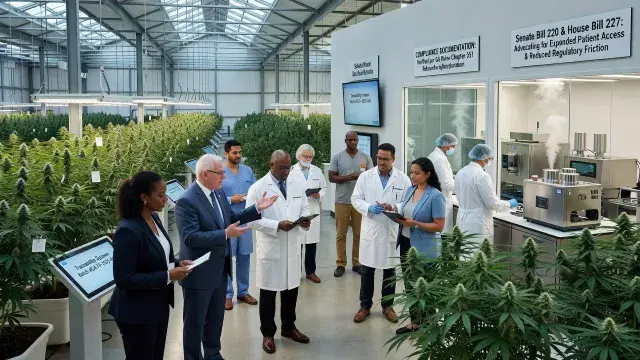
New York's adult-use cannabis market has crossed $4.1 billion in retail sales since legal sales began in December 2022, according to figures released by Gov. Kathy Hochul's office. The state now ranks third nationally in adult-use retail sales, a marker that arrives alongside a parallel story: a sustained campaign against unlicensed shops that officials say has removed hundreds of millions of dollars in illicit product from circulation. Both numbers matter, and they're connected in ways that operators understand better than most.
Licensing Numbers Tell Only Part of the Story
The state has issued 2,351 cannabis licenses, with 1,039 licensed adult-use retailers and 744 dispensaries currently open. That gap between licenses issued and stores actually operating is worth sitting with. Getting a license approved is one thing; clearing local zoning, securing a lease, building out compliant retail space, and passing storefront inspection is another matter entirely. For prospective operators, that gap is the whole ballgame - capital gets tied up, build-out timelines slip, and landlords grow impatient waiting on rent from a tenant who can't yet legally sell product.
Fifty-six percent of adult-use licenses have gone to Social and Economic Equity applicants, a figure the state is treating as a core measure of program success. In practice, though, equity licensing and retail viability are two different tests. A license holder from a community disproportionately affected by past cannabis enforcement still has to compete on wholesale pricing, inventory turns, and point-of-sale efficiency against operators with deeper pockets. Access to the market isn't the same as staying power in it.
Enforcement Is Reshaping the Competitive Field
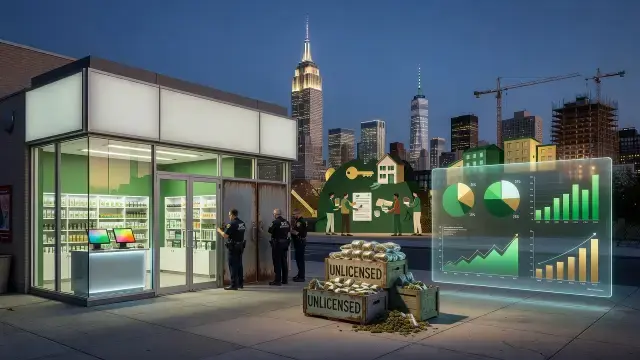
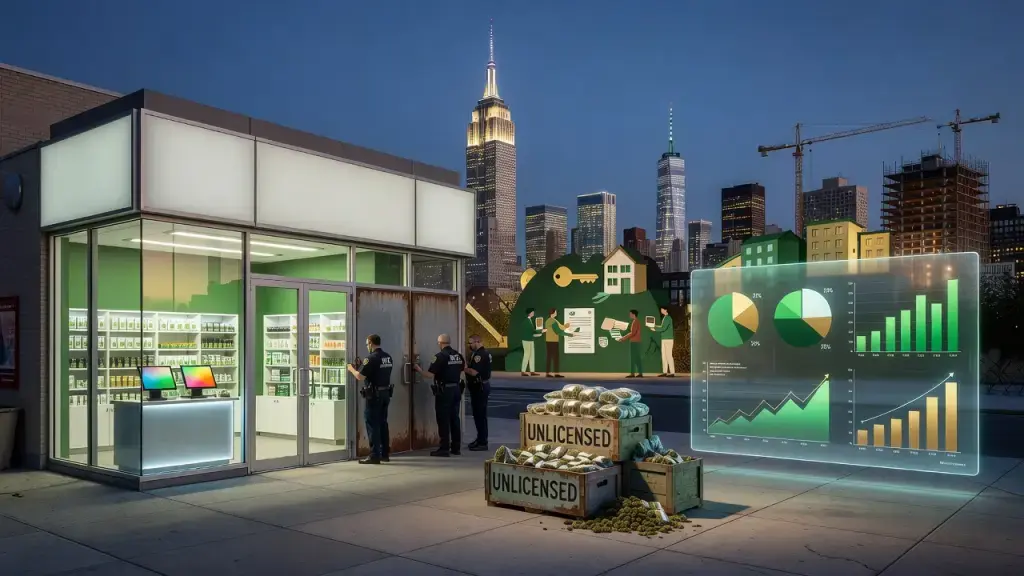
The state has conducted 2,257 storefront inspections and padlocked 738 illegal cannabis shops, seizing illicit product valued at more than $276 million. For licensed retailers who've invested in seed-to-sale tracking, lab-tested batches with verifiable COAs, and compliant packaging, this enforcement push is not an abstraction - it's the difference between competing on a level footing and getting undercut by a shop down the block selling untested product with no age verification and no tax remittance.
That illicit competition has been one of the sharpest pressures on legitimate operators since adult-use sales launched. Licensed dispensaries carry the full weight of excise tax, 280E tax exposure, compliance logs, and inventory audits. Unlicensed shops carry none of it. Closing those storefronts doesn't just protect consumers from unverified products - it protects the economics of the legal market itself.
Reinvestment Dollars Start Moving, Slowly
Through the Community Grants Reinvestment Fund, New York has committed $35 million toward communities affected by past drug enforcement. The first funding round distributed $5 million across 50 community-based organizations, directed at youth development, workforce training, housing, mental health, and harm reduction programs. It's a modest first tranche relative to the $35 million commitment, which suggests the bulk of that reinvestment is still ahead rather than behind.
For operators and investors watching the broader trajectory, the signal is this: New York is treating equity and reinvestment as ongoing policy infrastructure, not a one-time gesture. That has implications for how license applicants, landlords, and ancillary vendors - payment processors, compliance software providers, security firms - plan for a market that regulators clearly intend to keep expanding, while still tightening the screws on anyone operating outside the licensed system.