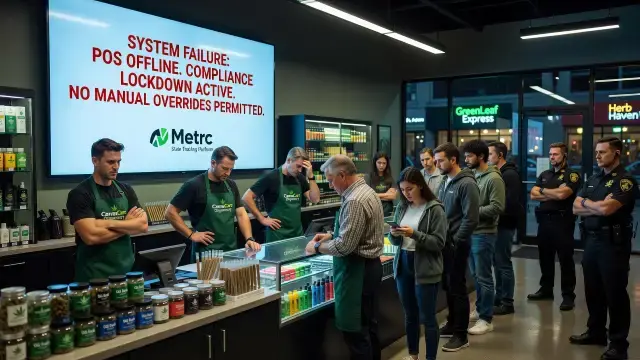
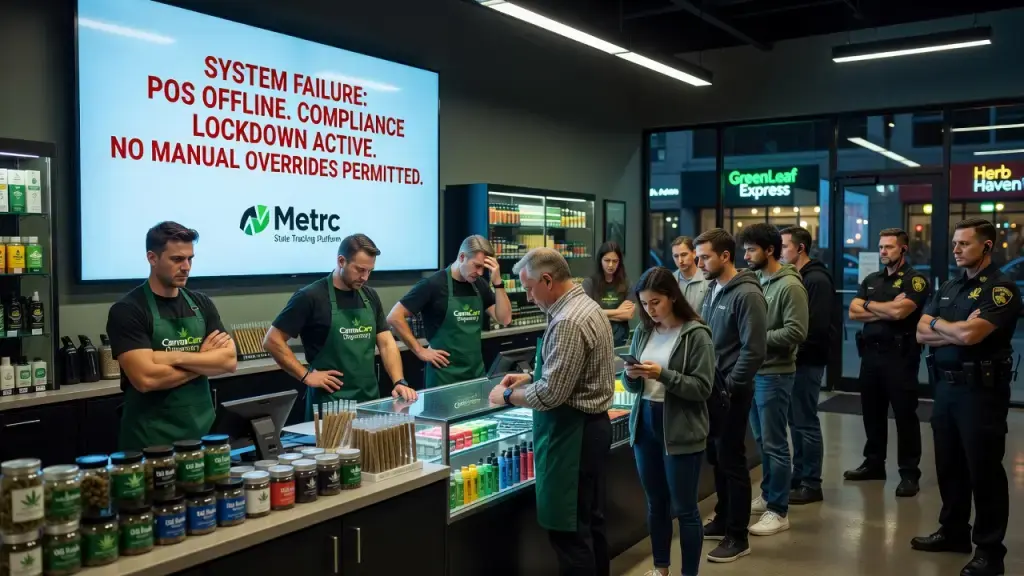
A frozen checkout screen means something different at a cannabis dispensary than it does at a liquor store or a convenience chain. There's no fallback to pen-and-paper cash transactions. State compliance regimes require real-time, system-based verification of IDs, purchase limits, and inventory tracking through platforms like Metrc - and when the point-of-sale system goes dark, so does the entire operation, legally and practically.
Why Cash Backup Isn't a Legal Option
Traditional retailers facing a tech outage can take cash, log sales manually, and reconcile later. Cannabis operators can't. Nearly every regulated market requires continuous, verifiable reporting of each transaction to a state tracking system before product leaves the budroom. Skip that step, even briefly, and you're out of compliance - regardless of intent. That single regulatory distinction turns a routine IT hiccup into a full operational shutdown. No sales, no workaround, no judgment call for the manager on duty.
The math on what that costs is straightforward: average hourly sales volume multiplied by hours offline. On a slow Tuesday morning, that number is manageable. On a Friday evening or a high-traffic weekend, it escalates fast - and the dispensary has no legal lever to pull to slow the bleeding.
The Costs That Keep Accumulating After the Screens Go Black
Lost sales are the visible damage. The less visible costs are what actually erode margin over time.
- Budtenders, security staff, and managers remain on the clock with zero selling capacity.
- Delivery operations stall - routing software, dispatch logs, and ID verification for drivers all run through the same frozen system.
- Loyalty apps and online menus disappear, pushing customers toward competitors with working storefronts.
- Reputational damage compounds with each outage, particularly on high-volume dates when customer expectations are already elevated.
That last point matters more than it might seem. Cannabis consumers, especially in competitive adult-use markets with multiple licensed storefronts nearby, don't wait around. A customer turned away once may not come back - not because the dispensary did anything wrong, but because convenience is the whole value proposition, and convenience just failed.
Where Standard Insurance Falls Short
Here's the catch many operators don't discover until it's too late: a standard cyber liability policy typically only responds to security incidents - ransomware, hacking, data breaches. If the outage traces back to a third-party POS vendor's server crash or a SaaS platform glitch rather than an actual breach, that policy may not trigger at all.
That gap is exactly what Contingent Business Interruption coverage, or a Dependent System Failure endorsement, is built to close. These endorsements extend financial protection to outages caused by vendors and dependent systems outside the dispensary's direct control - which, in practice, is where most POS failures originate.
Why Tech E&O Matters for Software Vendors, Too
The exposure runs both directions. When a widely used cannabis POS or menu-integration platform suffers an accidental outage on a peak sales day, the fallout doesn't stop with lost retail revenue - it often lands back on the vendor in the form of breach-of-contract claims and lawsuits over lost profits. Technology Errors and Omissions coverage is built specifically for that scenario, covering legal defense costs, settlements, and judgments when a software failure causes measurable financial harm to clients.
Redundant hardware and backup internet connections are worth having. They reduce certain risks. But they don't address failures originating outside the dispensary's own infrastructure, and they do nothing to offset the labor costs, delivery disruptions, or customer attrition that follow. A tailored insurance program - built around Cyber Liability, Contingent Business Interruption, and Tech E&O - is the financial backstop that operational fixes alone can't provide. No system is outage-proof. The question is whether the business is covered when, not if, the screens go black.