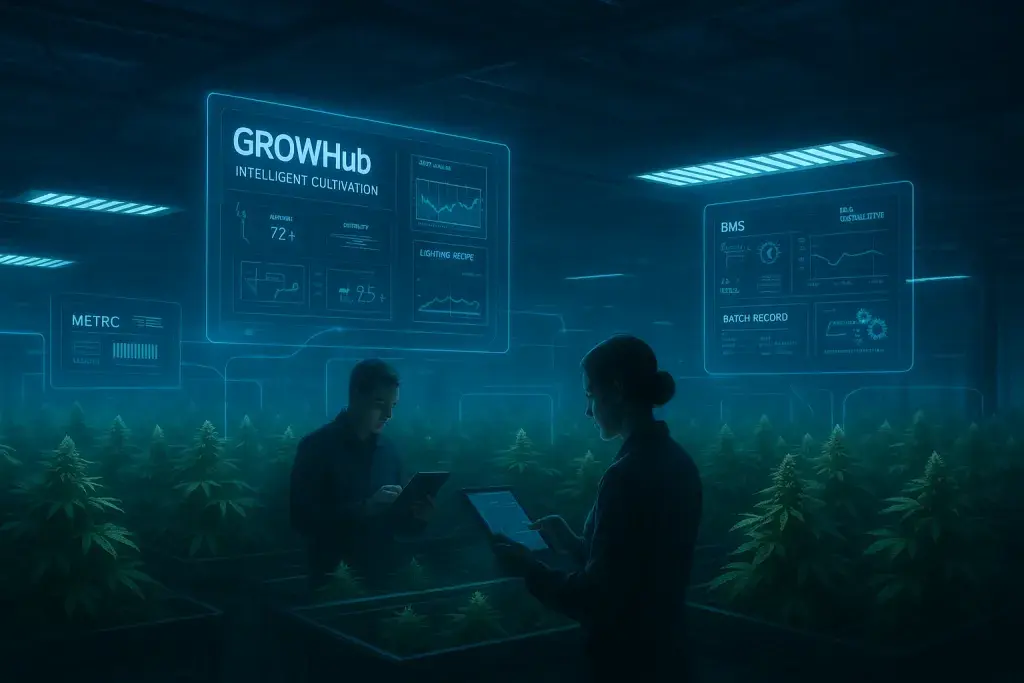
TSRgrow is rolling out a significant expansion of its GROWHub Intelligent Cultivation Software for 2026, adding analytics, energy monitoring, batch-record tools, Metrc integration and Building Management System connectivity to a platform that already controls the company's LED lighting and Remote Power infrastructure. The update matters because it addresses a problem most commercial cultivators know intimately: operational data scattered across lighting controllers, environmental sensors, spreadsheets and compliance software that rarely talk to each other.
For multi-state operators managing several cultivation facilities, that fragmentation isn't just an annoyance - it's a genuine compliance liability. Track-and-trace obligations under state programs require accurate, timestamped records tying inputs and conditions to specific plant batches, and when that information lives in five disconnected systems, audits get messier and slower than they need to be. The pressure to consolidate data isn't limited to the grow room, either; dispensary-facing platforms have been moving the same direction for years, which is part of why tools like cannabis retail management software maryland operators use have steadily added compliance and inventory features under one roof. Cultivation software is now catching up to that same logic.
Why Batch Records and Metrc Integration Carry Weight
Expanded batch-record functionality lets cultivation teams organize environmental conditions, lighting recipes and operational settings around individual crop cycles rather than reconstructing that history after the fact. Tie that into Metrc integration, and operators get a more direct link between what happened during cultivation and what regulators require for track-and-trace reporting. That's not a small thing. As federal rescheduling discussions continue and state regulators show no sign of easing reporting requirements, operators who can produce clean, traceable production records will have an easier time during audits and inspections than those relying on manual logs pieced together after harvest.
Sagal's point that "compliance should not exist separately from cultivation" reflects a broader shift in how ag-tech vendors are positioning themselves. Compliance has traditionally been treated as a back-office function bolted onto operations after the fact. Folding it into the same system that controls lighting and monitors environmental conditions reduces the manual re-entry that creates errors and, frankly, eats staff time that could go toward actual crop management.
Energy Monitoring Meets Facility-Wide Visibility
Energy costs remain one of the largest line items for indoor and greenhouse cultivators, and GROWHub's expanded energy monitoring - built directly into the Remote Power infrastructure - gives operators a way to evaluate lighting energy use alongside cultivation and environmental data rather than as a separate utility bill reviewed weeks later. Pair that with new BMS connectivity, and facility managers can see how lighting schedules, HVAC demand and production timing interact, instead of managing each system independently.
In practice, though, the value of any connected platform depends on adoption discipline. Data only becomes "actionable intelligence," to borrow the industry's favorite phrase, if cultivation teams actually use the historical comparisons to adjust recipes and schedules rather than letting reports pile up unread. That's an operational culture question as much as a software one.
What This Signals for Cultivation Operators
- Consolidated systems reduce reliance on manual recordkeeping and spreadsheet-based tracking across cultivation cycles.
- Metrc integration strengthens traceability ahead of anticipated regulatory scrutiny tied to federal rescheduling discussions.
- Energy monitoring tied to lighting infrastructure gives operators clearer visibility into one of their largest recurring costs.
- BMS connectivity moves cultivation software closer to full facility integration rather than isolated point solutions.
The broader trend here isn't unique to TSRgrow. Across cultivation and retail alike, software vendors are converging compliance, operations and analytics into single platforms because regulators, lenders and insurers increasingly expect operators to produce clean, defensible records on demand. Cultivators who treat these systems as documentation tools rather than optional add-ons will likely find themselves better positioned as compliance expectations continue to tighten.