
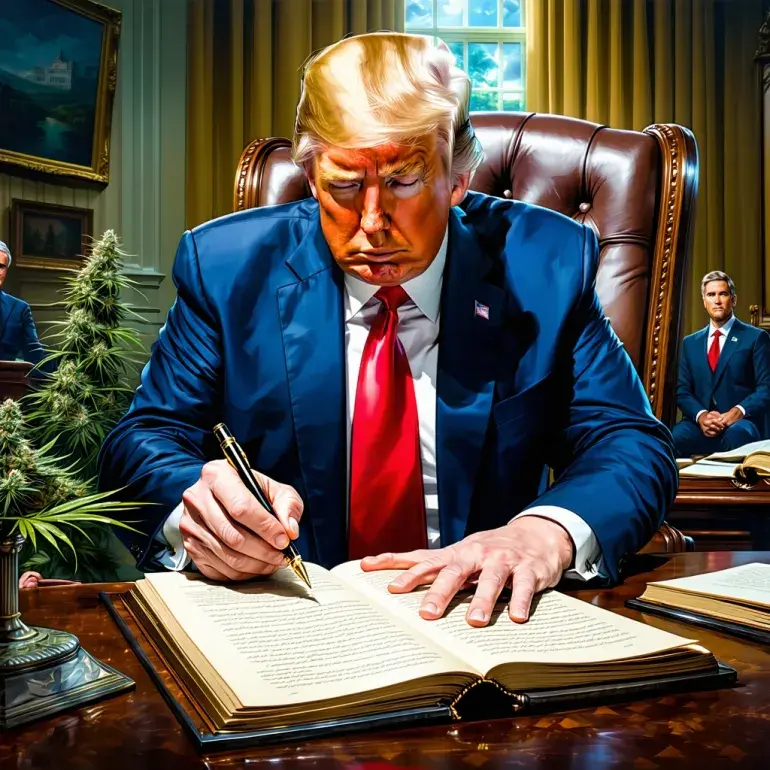
President Trump signed an executive order last Thursday directing the U.S. Drug Enforcement Administration to reclassify cannabis from Schedule I—a category for highly addictive drugs with no medical value—to Schedule III, recognizing its lower addiction potential and therapeutic benefits. This pivotal shift, while not altering state-level recreational sales, promises to ease research barriers and provide tax relief for businesses, aligning federal policy with growing evidence of cannabis's role in managing chronic pain and other conditions.
From Schedule I Stigma to Schedule III Reality
Cannabis has languished in Schedule I since 1970, alongside heroin and LSD, stifling federally funded studies despite decades of state-level medical programs. The order explicitly addresses this mismatch, noting how the classification has hindered access for patients seeking relief from chronic pain, nausea, and PTSD. Public health experts have long argued that cannabis's risks—primarily respiratory issues from smoking and potential cognitive effects in youth—are far less severe than opioids, which claim over 80,000 lives annually from overdoses.
Boosting Research and Veteran Care
The reclassification removes key hurdles to National Institutes of Health funding, enabling rigorous trials on cannabis's interaction with the endocannabinoid system—a network regulating pain, mood, and inflammation. Connecticut's cannabis ombudsman, Erin Gorman Kirk, highlights its urgency for veterans, where DEA delays have blocked studies on PTSD and traumatic brain injury treatments. Early data shows cannabis reducing opioid use by up to 64% in chronic pain patients, a trend this policy could quantify and expand.
- Schedule III eases public research grants previously deemed too risky.
- Targets veteran health, addressing suicide rates 1.5 times higher than civilians.
- Aligns with 38 states' medical programs serving millions.
Economic Relief for Businesses, Limited Consumer Impact
Connecticut operators like Ben Zachs of Fine Fettle and Rino Ferrarese of Affinity Cannabis welcome the change for its research promise but note minimal day-to-day shifts in a state-legal market. Crucially, it repeals Section 280E tax code restrictions, letting businesses deduct expenses and reinvest savings—potentially lowering prices. Adam Wood of the Connecticut Cannabis Chamber calls it "transformative for economic justice," while Trulieve CEO Kim Rivers eyes next steps like safer banking to enable stock listings.
Broader Implications for Public Health Policy
This move signals a federal thaw, reducing stigma and fostering innovation in non-psychoactive cannabinoids like CBD for epilepsy and anxiety. Yet challenges remain: recreational federal legalization lags, and interstate commerce is barred. As science advances, expect refined dosing guidelines and integration into mainstream medicine, benefiting the 30 million Americans grappling with chronic conditions amid an opioid crisis.