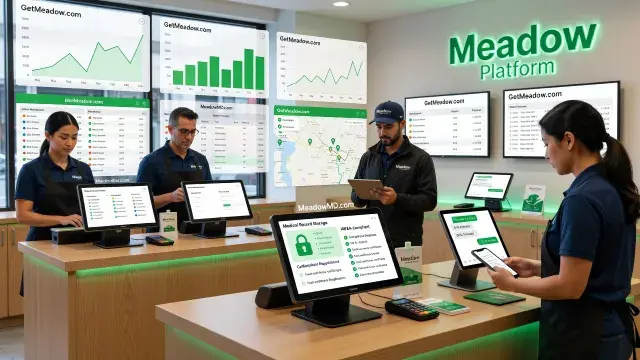
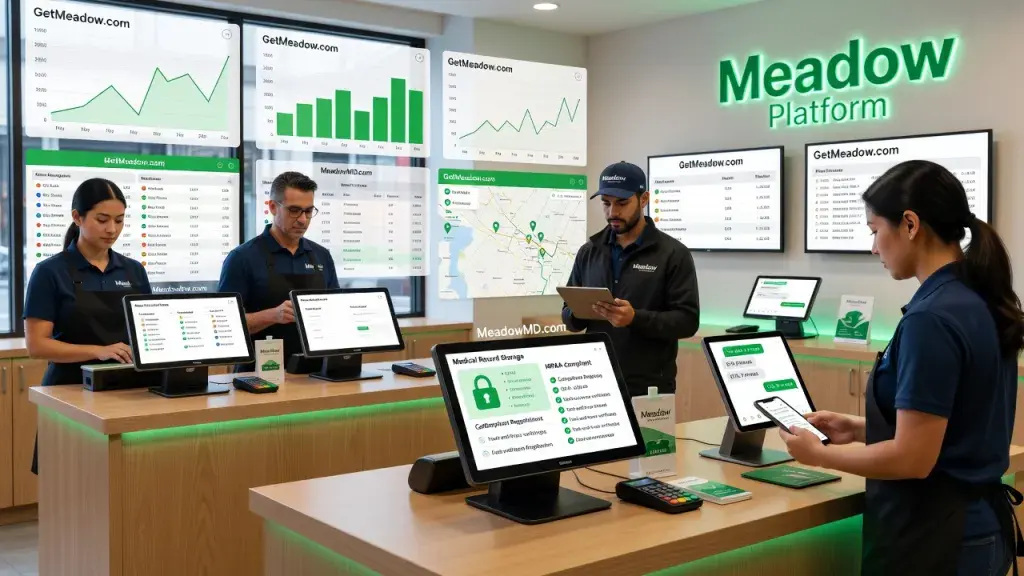
California's medical cannabis retailers have spent years cobbling together separate systems for point of sale, patient recordkeeping, and delivery logistics - an arrangement that works until it doesn't, usually right around an audit or a busy Friday afternoon. Meadow Platform, a software suite built by the San Francisco team behind GetMeadow.com and MeadowMD.com, is trying to close that gap by folding menu management, point of sale, inventory tracking, and analytics into one system aimed at dispensaries and delivery services operating under state medical cannabis rules.
From Consumer Menus to Back-Office Infrastructure
The platform's lineage matters here. It grew out of consumer-facing menu software originally built for GetMeadow's dispensary directory, then got repurposed for operator websites. That's a meaningful distinction for buyers evaluating retail technology: a system designed first for patient-facing browsing, later adapted for compliance and operations, tends to carry different strengths than software built from the ground up as a point-of-sale terminal. Since launching in November 2015, Meadow has added POS, inventory management, and data and analytics functions - the kind of expansion path common among cannabis tech vendors trying to become a single vendor relationship rather than one piece of a fragmented stack.
Compliance Is the Selling Point, Not an Afterthought
For a medical cannabis operator, the regulatory burden isn't abstract. Patient documentation has to be stored securely, verification has to happen at the point of sale, and recordkeeping has to hold up if a regulator comes asking. Meadow says its system satisfies California's medical cannabis compliance requirements, including HIPAA-compliant storage of patient documents - a detail that speaks directly to a persistent operational headache for dispensaries handling protected health information alongside ordinary retail transactions. That dual burden - treating patients like retail customers while also treating their records like medical files - is part of what makes cannabis retail technology different from a standard retail POS system. Software that fails on either side creates real exposure, whether that's a compliance violation or a data breach.
Delivery Adds Its Own Layer of Complexity
Delivery services face a separate set of operational pressures: driver routing, delivery manifests, and keeping patients informed about when their order will actually arrive. Meadow's suite includes driver tracking and routing displays along with direct messaging tools for patients awaiting delivery. Colleen Hooks, the company's Head of Communications, described the broader pitch as software meant to save operators time and resources while keeping them compliant "with all current and upcoming regulations" and positioned for scale. That forward-looking framing is worth noting on its own - California's cannabis regulatory framework has shifted repeatedly, and any operator investing in back-office software is, in effect, betting on a vendor's ability to keep pace with rule changes rather than falling behind them.
Pricing Structure and What It Signals
Meadow prices the platform on a sliding scale tied to the number of active patients, according to Hooks - a structure intended to let small, newly licensed dispensaries access the same software as larger operators without being priced out. That approach reflects a broader tension in cannabis retail technology: vendors need revenue that scales with usage, but undercapitalized operators, already squeezed by 280E tax treatment and limited access to traditional banking, need cost structures that don't punish them for being small. Wendy McPherson, owner of Flower Power dispensary, credited the company with a hands-on onboarding approach, including in-person training and ongoing support - the kind of service layer that often matters more to independent operators than any single software feature, particularly when staff are learning a new system while still running daily operations.
What Operators Should Weigh Before Adopting
- Whether the vendor's compliance claims are current with the latest state medical cannabis regulations, since rules change and software has to keep up.
- How patient data is stored, secured, and accessed, given the HIPAA-adjacent sensitivity of medical cannabis recordkeeping.
- Whether pricing tied to active patient counts fits a dispensary's actual growth trajectory, not just its current size.
- How well delivery tracking and messaging tools integrate with existing driver workflows and manifest requirements.
None of this replaces an operator's own compliance review. Software can support recordkeeping and verification; it doesn't substitute for a dispensary's obligation to understand and follow the regulations governing patient access, product handling, and data security in its own jurisdiction.