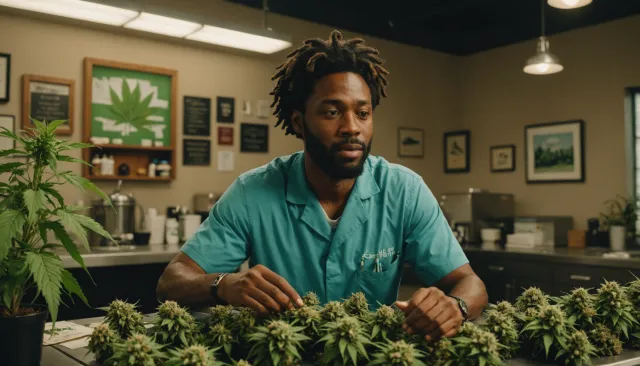
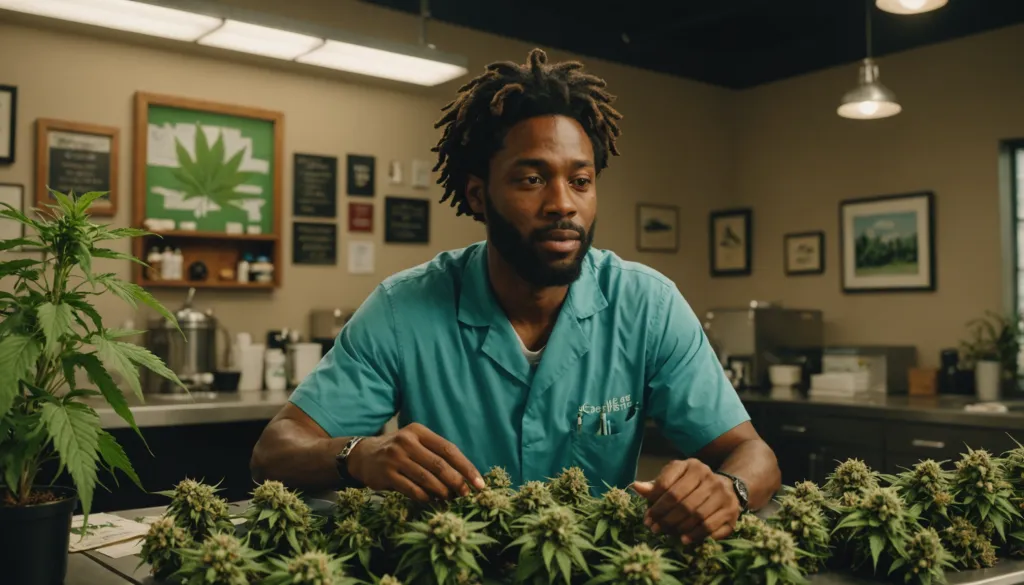
A shuttered Vietnamese restaurant in Evans, Georgia, is being converted into Fine Fettle's newest medical cannabis dispensary - a detail that says more about cannabis retail site selection than it might first appear. The company, which operates stores across Connecticut, Massachusetts, and Georgia, is set to open the Columbia County location on June 26, just days before Georgia's Senate Bill 220 takes effect on July 1 and materially expands the state's medical cannabis program.
Timing matters here. Fine Fettle received a provisional license from the Georgia Access to Medical Cannabis Commission in 2023, with an original opening planned for spring 2024 as a low-THC oil dispensary. That's the catch - the legislative upgrade embedded in SB 220 shifts the product category from low-potency oil to actual cannabis flower and strains, a change that meaningfully widens the store's potential product menu and SKU depth. For multi-state operators accustomed to building out full dispensary point-of-sale systems and inventory workflows across different regulatory regimes - as companies operating under frameworks like dispensary point of sale alaska understand well - adapting to a mid-license product expansion requires fast operational reconfiguration: updated compliance protocols, seed-to-sale tracking adjustments, new supplier agreements, and staff training on product categories that weren't previously part of the store's scope.
The Evans address - 4300 Towne Center Dr., the former Pho Bac restaurant - reflects a pattern common in regulated cannabis retail. Converting closed restaurant and retail spaces offers operators existing buildout infrastructure, established foot traffic corridors, and zoning that has already cleared food-service or commercial use review. That doesn't automatically translate to cannabis-compliant real estate, but it narrows the gap. The Pho Bac location operated for more than a decade before closing in 2023 when it merged with another restaurant. From a landlord's perspective, a licensed cannabis tenant in a post-pandemic retail vacancy is increasingly a viable proposition in states where medical programs are active and regulated.
What SB 220 Changes for Georgia Operators
Co-sponsored by state Sens. Lee Anderson, Harold Jones, and Mark Newton - representing both sides of the aisle in the Augusta-area corridor - the "Putting Georgia's Patients First Act" expands qualifying conditions and program requirements under Georgia's medical cannabis framework. The product-level upgrade from low-THC oil to broader cannabis forms is the operational headline for dispensary operators, but the expansion of qualifying conditions is equally significant for patient volume projections. More eligible patients means more registered cardholders, which translates directly to dispensary foot traffic, transaction volume, and the compliance burden of verifying patient status at the point of sale.
For operators like Fine Fettle, the July 1 effective date creates both opportunity and pressure. The grand opening is scheduled for June 26 - meaning the store will open under one regulatory framework and shift to expanded product and patient parameters within days. That's a non-trivial compliance event. Patient education, staff readiness, budroom inventory depth, and POS configuration all need to reflect the updated law essentially from day one of real operations.
A Competitive Market in a Constrained State
Fine Fettle is not alone in Evans. Trulieve - one of the largest multi-state operators in the country - opened its fifth Georgia location on Washington Road in Evans back in September 2023. Two licensed dispensaries operating in relatively close proximity in a single Georgia county reflects how concentrated licensed retail can become in states with strict license caps and limited dispensary counts. Georgia's medical program has moved deliberately, and the commission-controlled licensing structure means operators who secured provisional licenses early have a meaningful first-mover advantage.
What's striking here is that both stores are in Evans - a suburban Columbia County community, not a major metro center. That geography points to patient demand patterns in medically conservative states: population density, proximity to Augusta's healthcare infrastructure, and a patient base that is likely navigating the program for the first time. The June 26 grand opening format - where patients and caregivers can learn about qualifying conditions and how to obtain a medical cannabis card - reflects that reality. This isn't a store opening into a mature, educated market. It's a licensed operator helping to build one.

Operational Realities for a Multi-State Operator in a Restricted Market
Fine Fettle's Georgia footprint currently sits at three stores, alongside eight in Connecticut and two in Massachusetts. That multistate profile matters for understanding how the company approaches a restricted medical market like Georgia. Operators with experience across different regulatory regimes carry institutional knowledge about compliance documentation, state-specific reporting requirements, packaging standards, and patient verification workflows. In practice, though, each state program still requires its own operational build - the tools may transfer, the processes need to be rebuilt from scratch to match local rules.
With SB 220 expanding the program's scope on July 1, Georgia's medical cannabis operators are effectively entering a new phase of the state's regulated market. Whether that translates into sustainable dispensary economics - given the licensing constraints, patient population size, and product category limits that still apply - remains to be seen. The restaurant that once served pho on Towne Center Drive is now a compliance-intensive retail operation in one of the more tightly controlled medical cannabis markets in the Southeast. That transition, unglamorous as it sounds, is exactly how regulated cannabis retail takes root.