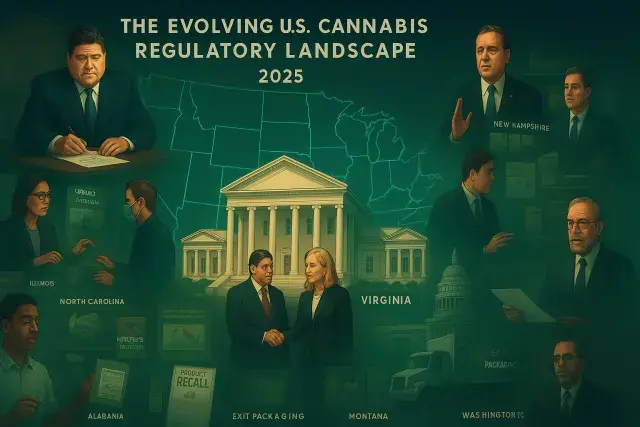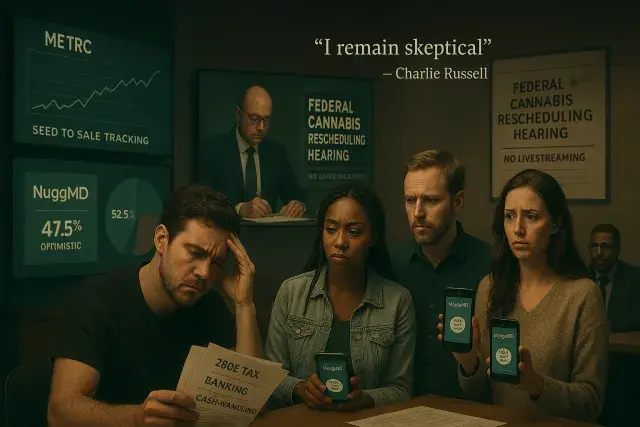
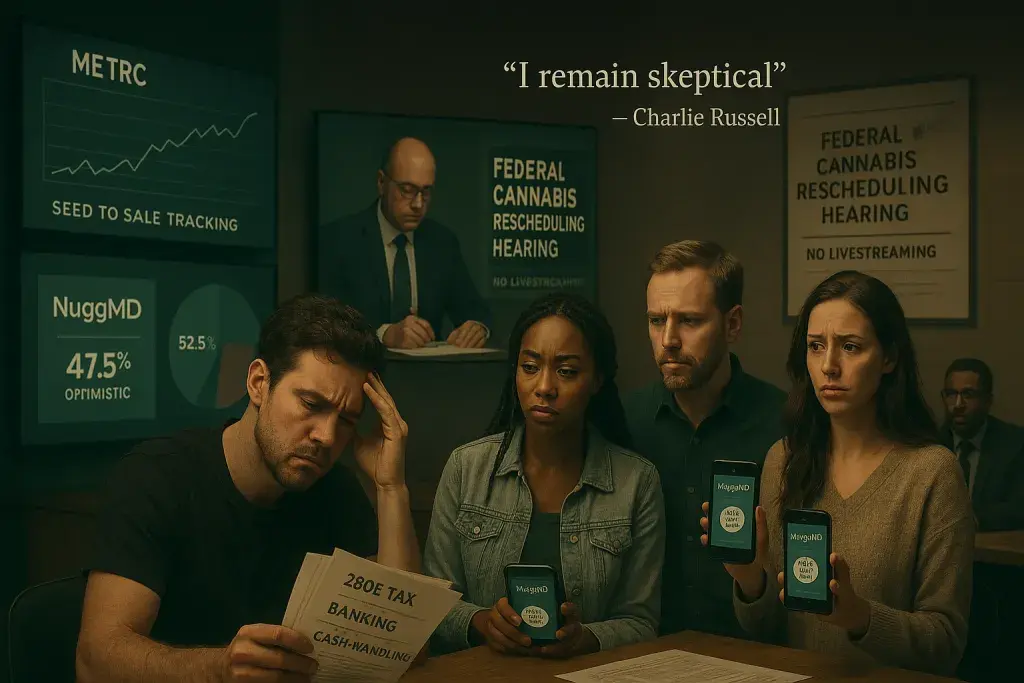
Most cannabis consumers don't believe full federal rescheduling will be finished by the end of 2025-and given the procedural runway still ahead, that skepticism isn't hard to understand. A new poll from cannabis telehealth platform NuggMD found that 52.5 percent of respondents do not expect comprehensive marijuana rescheduling to be completed by year's end, compared to 47.5 percent who do. The survey covered 1,063 cannabis consumers across state-legal markets between July 2-6, with a margin of error of ±3.01 percentage points.
The context matters here. Acting Attorney General Todd Blanche signed an order in April that moved state-licensed medical cannabis-and any FDA-approved marijuana products-from Schedule I to Schedule III of the Controlled Substances Act. That was a targeted, immediate action. The broader question of whether all other cannabis follows the same path is what the ongoing DEA administrative hearing is working through. For dispensary operators watching this process unfold, the distinction is significant: partial rescheduling affects medical programs directly, but adult-use retail operations remain in a different federal posture for now. To understand what a rescheduled environment could mean for state-licensed markets in practice, see how it works in markets like Ohio, where operators are already managing the transition between medical-only and adult-use compliance frameworks.
The DEA administrative law judge overseeing the hearing is expected to wrap proceedings by July 15. After that, the timeline gets murky. The judge must issue a recommendation to the DEA administrator-and nobody outside the agency knows exactly how long that will take, or what that recommendation will say. The administrator then makes a final call. There's no statutory stopwatch on any of these steps. That's the procedural reality operators are sitting with right now.
What the Hearing Has Actually Produced
One detail that stands out: reform advocates were excluded from participating in the hearing as formal participants. That generated real frustration in the industry. But early reporting on what the DEA itself has put into the record suggests the agency has focused testimony on cannabis's medical benefits and its relative safety profile compared to alcohol and other controlled substances. NuggMD CEO Charlie Russell acknowledged that the hearing has produced more persuasive testimony than many expected. "Early reports have increased my confidence that the hearing will result in full rescheduling," he said.
That's a measured read. The hearing's exclusionary structure remained a point of contention-Marijuana Moment reported that its staff, along with a sitting congressman and other journalists, formally requested that DEA Chief Administrative Law Judge Derek Julius and DEA Administrator Terrance Cole reverse a ban on public livestreaming of the proceedings. The agency held its position. The hearing proceeded without public access.
What Rescheduling Actually Changes-and What It Doesn't
Here's the catch that sometimes gets lost in broader coverage: moving cannabis to Schedule III is not legalization. Adult-use cannabis remains a state-level construct. Schedule III designation affects how the federal government classifies a substance-its research accessibility, import and export rules, and certain law enforcement priorities-but it does not create a federal retail framework or preempt state licensing systems.
The operational pressure most dispensary owners feel every day-280E tax exposure, banking access, cashless payment workarounds, compliance with seed-to-sale tracking systems like METRC-those don't evaporate with a scheduling change. The 280E issue is the one most operators are watching most closely. Under current tax law, cannabis businesses cannot deduct ordinary business expenses because they traffic in a Schedule I controlled substance. A move to Schedule III would, in principle, remove that disqualification-potentially reshaping the economics of licensed retail operations that have been absorbing those tax burdens for years. That would be a meaningful financial shift, not a symbolic one.
Banking access is more complicated. The SAFE Banking Act has stalled repeatedly in Congress, and rescheduling alone does not mandate that financial institutions extend services to cannabis retailers. Payment infrastructure, armored cash handling, and point-of-sale workarounds would likely remain facts of life until Congress acts separately. Operators building their financial models around rescheduling as a banking fix may be getting ahead of the actual policy mechanism.
The Industry Can't Afford to Plan Around a Single Outcome
The consumer skepticism captured in the NuggMD poll reflects something operators already know from experience: federal cannabis policy moves slower than announcements suggest. Even when the policy direction is favorable, the procedural distance between a hearing conclusion, a judge's recommendation, an administrator's decision, and any subsequent legal challenges is not trivial. Litigation from participants who oppose rescheduling remains a real possibility regardless of what the DEA ultimately decides.
For multi-state operators, the calculus is especially layered. Compliance obligations-lab testing protocols, COA documentation, licensed packaging requirements, state-mandated inventory controls-all remain in force irrespective of what happens federally. Brands and wholesalers operating across multiple state markets still have to navigate each state's own regulatory structure. A favorable federal ruling simplifies some things at the margin; it does not flatten the compliance burden built into licensed cannabis retail at the state level.
Smart operators aren't waiting. They're building processes and technology systems that work under the current framework and hold up if the framework shifts. That's not pessimism-that's just how regulated industries operate when the rules are still being written.